
Longtime CUNY activist Conor Tomás Reed penned the following endorsement of CUNY Struggle. We are honored to have Conor’s support, but dismayed to hear about disenfranchisement throughout the Graduate Center chapter. If you feel you have been disenfranchised in this election, contact the PSC immediately (drosato@pscmail.org) and then email cunystruggleinfo@gmail.com to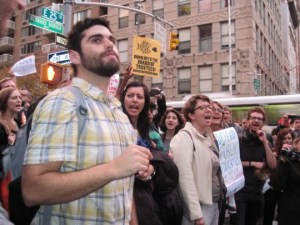 tell us the story.
I just found out that I can’t vote in The Graduate Center PSC election because of a technicality. For those of you in CUNY Struggle and the New Caucus and Fusion Independents with whom I’ve had the honor to struggle alongside for several years, I’m saddened about this disenfranchisement, but I also know that it symbolizes the inadequacies of “democracy” without a liberation framework. In lieu of a secret mail-in ballot, I wish to publicly vote my support for the CUNY Struggle slate.
We all fought hard to get a Professional Staff Congress/CUNY chapter on our campus, even as PSC Central set up technicality roadblocks to delay it. We all fought hard to authorize a 97% YES strike vote in Spring 2016, even as PSC Central then urged many of us to ratify a woefully uneven contract (which I am still proud my subsequent vote rejected). Within the past few years, many new and continuing GC organizers — on both slates and beyond — have broadened our reach and transformed what a union could do and feel like. We’ve also convinced PSC Central to take some risks and defend its members who are regularly on the frontlines.
While both CUNY Struggle and New Caucus and Fusion Independents have advocated new vibrant approaches to CUNY/NYC movement work, we are at a crossroads and must become more daring. As we face the precipice of authoritarianism, attacks and deportations of the most marginalized, automatic-dues dissolution for what’s left of U.S. unionism, and violent inequalities from schools to communities, even the most fiery-tongued of orthodox labor strategies is insufficient — especially when fused with top-down undemocratic union methods that have kept most of PSC’s membership uninvolved. CUNY Struggle presents an explicit break with various failed PSC models, and importantly, does so within The Graduate Center PSC chapter that is best poised to influence and turn the entire union into a fighting force CUNY-wide.
CUNY Struggle’s victory would no doubt be a contradictory transition moment. Even as CS members are more keenly attuned to the kinds of resistance that our union and university must create to survive and thrive, NCFI members helped to shape our fledgling chapter into existence and built trust with a broad layer of new union participants. Even as CS would possibly face isolation or derision by PSC Central’s New Caucus, our GC chapter would need to stand by our decision to support this organizing alternative. Even as both slates have highlighted each other’s flaws during the election campaigns, we’d need everyone to build upon NCFI’s foundations while embracing CS’s vision to (actually) center adjuncts in our next contract, prepare now to take militant strike actions, and directly connect to broader social struggles. Crucially, we’d need to make top-tier calcified leadership irrelevant by activating the entire PSC base to create a democratic and liberatory union. Leadership in a union matters, but leaders without a genuine rank-and-file movement are just toy generals, no matter what their politics.
From California to Chicago to Seattle, and from Chile to Mexico to Puerto Rico to Quebec to South Africa, we see how education upheavals can precipitate wider social changes — not through charisma or coercion, but in the words of Paulo Freire, through “education as a practice of freedom.” Our position in CUNY is no less strategically profound. I’m eager to continue practicing freedom with my comrades on both slates. Our longtime CUNY movement is worth all of your continued organizing efforts, no matter the election results.
I welcome CUNY Struggle to aptly seize the moment in leading alongside us all in a new movement direction, and I urge The Graduate Center PSC chapter to also vote for a radical grassroots CUNY Struggle.


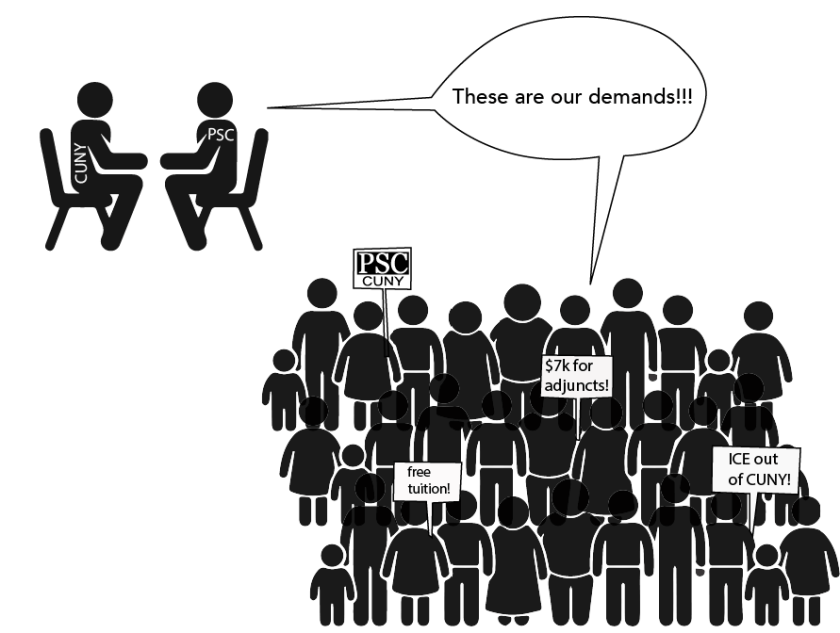
 In March 2016, we organized a Popular Assembly that brought together over 100 activists from across CUNY, including undergraduates and CUNY workers, to link the fight for a new contract with student struggles for free tuition and against campus policing.


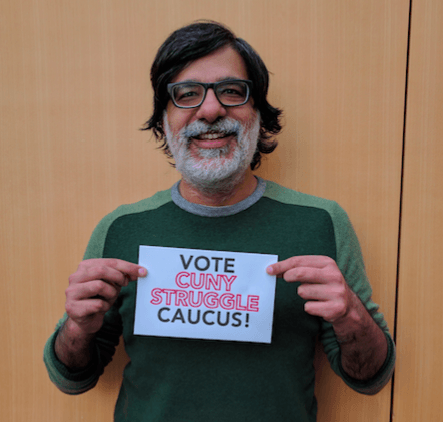
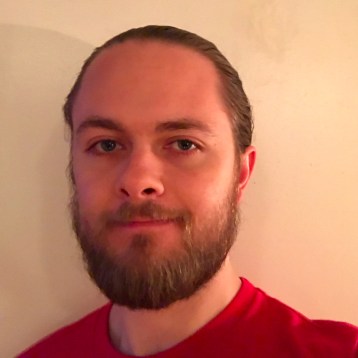 Andrew is a second-year PhD student in Sociology at the Graduate Center and teaches social theory at Queens College. He is also a member of the
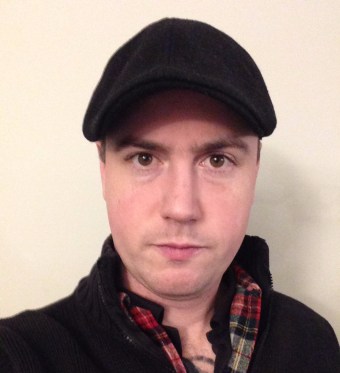 Jarrod (Environmental Psychology) is an activist-scholar, author, essayist, zinester, and political agitator. Jarrod has published over a dozen literary and political zines, co-edits the creative nonfiction journal Hard Crackers, and is a member of the Insurgent Notes collective. Jarrod has also published over two dozen essays and articles, translated into at least four languages, in venues including Vice, The New Inquiry, and Gothamist. Maximum Rocknroll called Jarrod’s “Satan Was So Over it” zine “witty, well executed, and still very punk” and The Industrial Worker called Jarrod’s novella It’s a Tough Economy! “a commendable contribution toward what working class literature could and should aspire.” Jarrod is a founding member of CUNY Struggle.
 Shelley is a PhD candidate in environmental psychology. She teaches in urban studies at Queens College courses including
 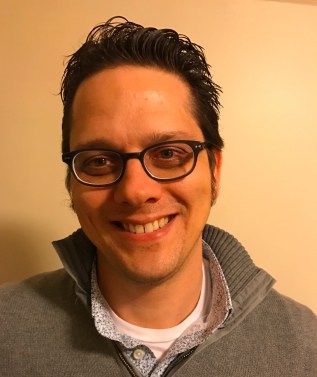 Jakob Schneider is a second-year doctoral student in the Environmental Psychology program. He teaches at Hunter College in the Urban Policy and Planning Department, and is a research associate at the Housing Environments Research Group at the Graduate Center. At present, he is conducting research in Chicago with a group that is employing a movement-based strategy to protect residents from eviction and reclaim bank-owned abandoned properties to provide housing to homeless families on the city’s South Side.
 Jeremy Randall is a PhD candidate in history. His dissertation focuses on the intersections of leftist political thought and culture during the Lebanese Civil War (1975-1990). He currently serves as the Officer for Library and Technology for the Doctoral Students’ Council and is one of the program representative’s for history and has previously been an adjunct instructor at John Jay College. Currently he is a WAC fellow at Hunter College.
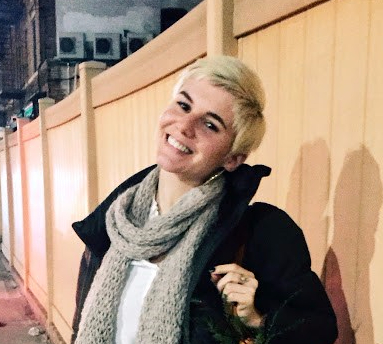 Amelia is a Doctoral Fellow in Sociology at the GC whose research focuses on the intersection of race and class in the American Labor Movement. After spending four years as a union organizer with Unite Here in Chicago, her most recent project looks at unions’ responses to the movement for black lives, examining actions taken by unions since 2014 to address anti-black racism as an issue that both impacts working class people’s lives broadly and plagues unions internally. Amelia lives in Brooklyn and teaches Sociology at John Jay College. She is an active member of the New York chapter of SURJ (Showing Up for Racial Justice).
 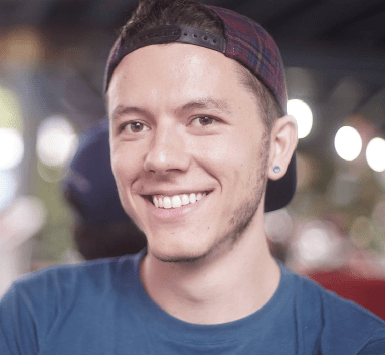 Nicholas Glastonbury is a PhD student in cultural anthropology at the Graduate Center and an instructor in the anthropology department at Hunter College. His dissertation research focuses on Kurdish-language radio broadcast infrastructures during the Cold War. He works as a freelance literary translator and currently serves as a co-editor of the Turkey Page for the e-zine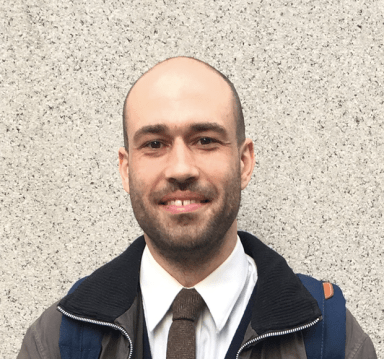
 cunystruggle.org